Electric Propulsion & Thrusters for Boats and Yachts in the Algarve

Algarve Marine Services supplies Rim Drive Technology electric thrusters and auxiliary motors for boats and yachts. These electric marine propulsion solutions offer an alternative to conventional systems, helping improve vessel manoeuvrability and supporting a range of propulsion applications.

Whether you are repowering a tender or day boat with a fully electric main motor, adding quiet auxiliary power to a sailing yacht, or making berthing easier with a bow or stern thruster, the Rim Drive range has a solution, from 0.5 kW to 75 kW.

Rim Drive Technology Electric Motors & Thrusters


Rim Drive Technology is a Dutch manufacturer specialising in electric rim-drive propulsion for boats and yachts. Its range covers POD motors, steerable PODs, outboards and bow and stern thrusters, all developed and manufactured in the Netherlands.

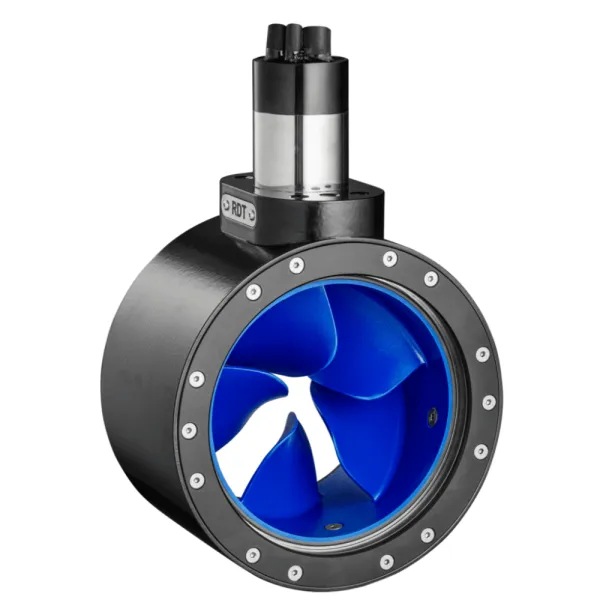
Unlike conventional designs, a rim-drive motor has no central shaft: the electric motor sits in a ring around the propeller. This reduces the risk of ropes, nets and debris wrapping around the drive and removes the need for conventional shaft seals.

The result is a compact, low-maintenance system with immediate, stepless control, suited to new builds and refits alike.

How Rim Drive Technology Works

In a rim-driven motor, the electromagnetic drive components are arranged around the propeller's outer circumference rather than transmitting power through a conventional central shaft. The propeller rotates within the surrounding motor assembly to generate thrust.


This design offers several distinctive characteristics:

Shaftless propulsion: no central drive shaft around which ropes and nets can become entangled.

Compact motor arrangement: the motor is integrated around the propeller, allowing different installation configurations.

Fewer conventional drive components: the design avoids a traditional shaft and its associated sealing arrangement.

Electric operation: power is supplied by an appropriate electrical system and motor controller, according to the selected model.


Electric Main Propulsion: POD Motors, Steerable PODs & Outboards

Rim Drive Technology motors can be used as the main propulsion system, not only as an auxiliary drive. POD motors, steerable PODs and outboards power tenders, day boats, tour and passenger boats, and electric new builds and refits. On sailing yachts and larger motor yachts, the same motors also work as quiet auxiliary propulsion.

Every motor uses the same rim-drive principle as the thrusters: no central shaft, a single rotating part, and a sealed, corrosion-resistant winding designed for saltwater use.


Electric POD Motors

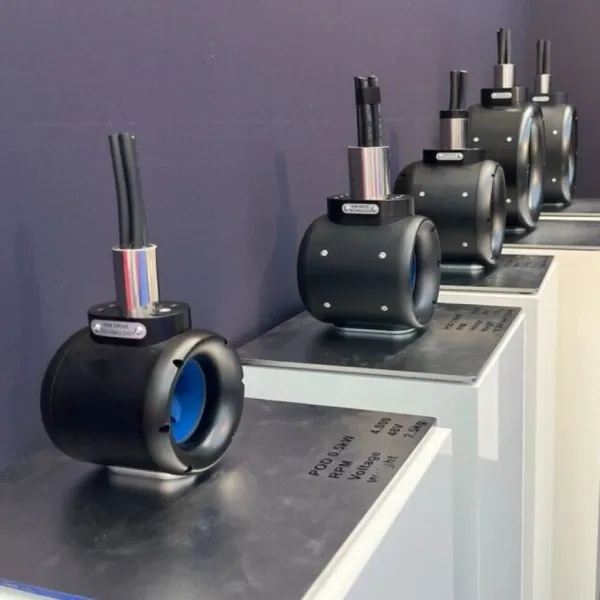
A POD motor is mounted below the hull and drives the boat directly, as a compact and lightweight alternative to an inboard engine and shaft line. The standard range runs from 0.5 kW to 75 kW, with nominal voltages from 24 V to 800 V.

Model Power Nominal voltage Weight Static thrust
POD 0.5 0.5 kW 48 V 2.5 kg 7 kgf
POD 2.5 2.5 kW 24 V 3.5 kg 24 kgf
POD 3.0 3 kW 48 V 3.5 kg 31 kgf
POD 4.2 4.2 kW 24 V 5 kg 50 kgf
POD 5.0 5 kW 48 V 5 kg 62 kgf
POD 8.0 8 kW 48 V 10 kg 120 kgf
POD 11.0 11 kW 48 V 14 kg 156 kgf
POD 15.0 15 kW 48 V 22 kg 195 kgf
POD 22.0 22 kW 48 V 50 kg 300 kgf
POD 22.0 (96 V) 22 kW 96 V 50 kg 300 kgf
POD 25.0 25 kW 96 V 70 kg 380 kgf
POD 30.0 30 kW 110 V 70 kg 400 kgf
POD 50.0 50 kW 400–800 V 73 kg 720 kgf
POD 75.0 75 kW 400–800 V 100 kg 850 kgf

Specifications are based on the manufacturer's published data and may change. Battery sizing and pricing are confirmed on enquiry for your vessel.


Steerable POD Motors

A steerable POD combines propulsion and steering in one unit and replaces the conventional rudder. The standard version is controlled electronically through a CAN system and responds to a joystick or steering wheel. Its Zero Turn Steering lets the boat rotate on the spot, which makes stern-to berthing and narrow marina fairways far easier. An entry-level version integrates with existing steering cylinders and cables, so it suits refits as well as new builds. Optional functions include Side-Shift Parking Mode, Magnetic Compass Correction and Steering Sensitivity Mode, and installation can be completed within a day.

Steerable PODs are available in the same power range as the POD motors, from 2.5 kW to 75 kW, with the same thrust figures. Weights and full specifications are available on request.


Electric Outboards

Rim Drive electric outboards bring the same shaftless, water-lubricated and low-maintenance design to a transom mount, making them a natural choice for tenders, RIBs and small day boats. Thanks to Rim Drive's modular system, a fixed POD can be converted into a steerable POD or an outboard in around 30 minutes.

Electric outboards are available in the same power range as the POD motors, from 2.5 kW to 75 kW, with the same thrust figures. Weights and full specifications are available on request.


Motor Power, RPM and Vessel Speed

Motor power, rotational speed and vessel speed are different measurements. Power is expressed in kilowatts (kW), motor rotational speed in revolutions per minute (RPM), and vessel speed in knots.

Whether used as main or auxiliary propulsion, achievable boat speed depends on the motor, propeller, transmission or drive arrangement, hull design, displacement and operating conditions. A motor's RPM alone does not establish the maximum speed of a vessel.


Electric Propulsion on the Algarve Coast

Electric propulsion is an excellent fit for marina manoeuvring, tenders, harbour and lagoon trips, and auxiliary use on sailing yachts. For longer runs along the coast, range depends mainly on the battery bank, the hull and the cruising speed, so we size each system around how and where the boat will actually be used, including Atlantic conditions off the Algarve.

Where a fully electric setup is not the right answer, a Rim Drive motor can work alongside an existing engine as auxiliary power, giving silent, emission-free running in the marina and in protected areas such as the Ria Formosa.

Electric Bow Thrusters for Boats & Yachts

An electric bow thruster produces lateral thrust at the front of a vessel, helping move the bow to port or starboard at low speeds. This makes it easier to manoeuvre in marinas, approach tight berths and maintain control when wind or current affects docking.

Rim Drive Technology offers standard bow thrusters across a range of power ratings, allowing different systems to be considered for different vessel requirements.

Rim Drive electric bow thruster range from 0.5 kW to 75 kW

The manufacturer's standard thruster range includes models from 0.5 kW to 75 kW. Selection should be based on the vessel's requirements rather than power rating alone.


Model Power Nominal voltage Weight Static thrust
Thruster 0.5 0.5 kW 48 V 2.5 kg 5.5 kgf
Thruster 2.5 2.5 kW 24 V 3.5 kg 19 kgf
Thruster 3.0 3.0 kW 48 V 3.5 kg 25 kgf
Thruster 4.2 4.2 kW 24 V 5 kg 44 kgf
Thruster 5.0 5.0 kW 48 V 5 kg 55 kgf
Thruster 8.0 8.0 kW 48 V 11 kg 105 kgf
Thruster 11.0 11.0 kW 48 V 14 kg 140 kgf
Thruster 15.0 15.0 kW 48 V 18 kg 175 kgf
Thruster 22.0 22.0 kW 48/96 V 50 kg 265 kgf
Thruster 25.0 25.0 kW 96 V 70 kg 320 kgf
Thruster 30.0 30.0 kW 110 V 70 kg 350 kgf
Thruster 50.0 50.0 kW 400-800 V 73 kg 660 kgf
Thruster 75.0 75.0 kW 400-800 V 100 kg 730 kgf

Specifications are based on the manufacturer's 2026 standard bow/stern thruster catalogue and may change. kgf means kilogram-force.


These specifications provide a starting point for comparing products. The appropriate thruster depends on factors including vessel length, displacement, hull design, windage, installation position and electrical-system capacity.

Stern Thrusters & Side Thruster Solutions

A stern thruster provides lateral control at the rear of a vessel, complementing a bow thruster when manoeuvring in restricted spaces. Together, bow and stern thrusters can help the skipper position the vessel more precisely when approaching or leaving a berth.

Rim Drive Technology's standard thruster design can be used at the bow or stern, subject to the vessel's installation requirements. Different configurations are available to accommodate different hull designs and mounting arrangements.


Available Thruster Configurations

Standard Bow and Stern Thrusters

Compact electric thrusters designed to generate lateral thrust. Their installation position and required power depend on the vessel's design and manoeuvring requirements.

Tunnel Thrusters and Tunnel Sets

Tunnel installations place the thruster within a transverse passage through the hull. Tunnel diameter, position and dimensions must be compatible with the selected system and vessel structure.

Bow Thruster Boxes

Box-type assemblies provide an alternative installation arrangement for suitable vessels. Rim Drive Technology's box design allows access to the motor through a removable cover, with the installation configured according to the manufacturer's requirements. This can simplify access to the motor without necessarily requiring the vessel to be lifted out of the water.


The appropriate configuration depends on the hull design, available installation space, tunnel dimensions and required performance.

Choosing the Right Marine Thruster or Electric Motor

Selecting the right electric thruster or motor starts with understanding your vessel, its existing equipment and how you intend to use it.

To help us identify relevant products and specifications, please provide:

Vessel make, model and year

Vessel length and approximate displacement

Required equipment: main propulsion motor (POD, steerable POD or outboard), auxiliary motor, bow thruster or stern thruster

Existing equipment: tunnel dimensions, propulsion arrangements and electrical-system details, where available

Power on board: existing battery bank, shore power and charging setup, if known

Intended application: main propulsion, auxiliary propulsion, berthing assistance, tender, or tour and passenger use

Specific requirements: preferred power rating, voltage or installation constraints, if known


This information will help us direct your enquiry towards suitable products and the relevant technical specifications.

Rim Drive Technology Projects

From electric hydrofoils to private yachts, Rim Drive motors are already at work on vessels around the world.

A few examples:

Electric Speed Boat – Steerable POD 11.0

A 7-metre speed boat combining comfort and manoeuvrability, powered by a single Rim Drive Steerable POD 11.0. With a 28 kWh battery it reaches a top speed of 15 knots and cruises at 5 knots on 7.5 kW, with around 4 hours of running time.

Motor Yacht – Twin Electric Outboards 15.0

A 12-metre, 7,000 kg motor yacht fitted with two Rim Drive Entry Level Outboard 15.0 motors. A 60 kWh battery gives around 7 hours of running time, cruising at 4.3 knots on just 2 × 3.7 kW.

Tour Boat – Twin Electric Outboards 11.0

A 32-passenger tour boat for shallow waters, powered by two Rim Drive Entry Level Outboard 11.0 motors. With a 40 kWh battery it runs for around 5 hours and reaches 6.5 knots.

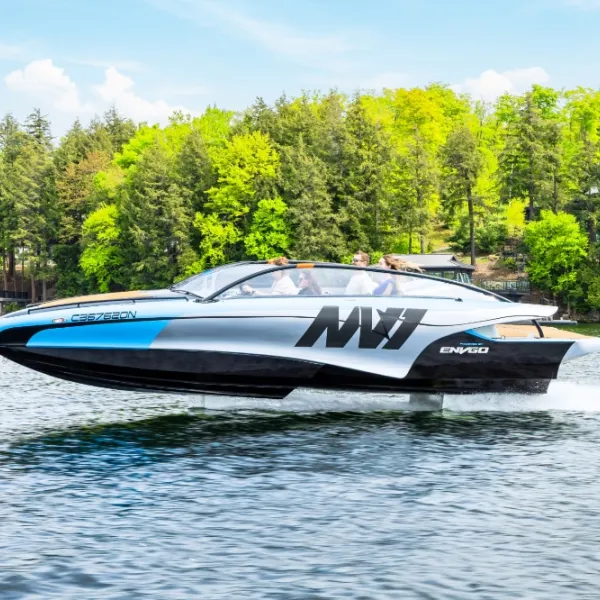
ENVGO NV1 – Electric Hydrofoil

A fully electric foiling boat that lifts above the waves, showing what rim drive propulsion can do as a main drive.

Stern Thruster Installation

A compact Rim Drive stern thruster fitted for precise control when berthing stern-to.


Want to see more? Rim Drive Technology's reference portfolio brings together projects and installations from around the world, from electric tenders and day boats to ferries, sailboats and commercial vessels.

Download the Rim Drive reference portfolio (PDF)

Rim Drive Technology Products from Algarve Marine Services

Algarve Marine Services supplies the full Rim Drive Technology range in the Algarve: POD motors, steerable PODs and outboards for main or auxiliary propulsion, plus electric bow and stern thrusters, tunnel sets and thruster boxes. Our team in Marina de Vilamoura can help with specifications, availability and pricing for your boat.


Contact our team to discuss your vessel's requirements and explore the available Rim Drive Technology range.


Did you know?

Rim Drive Technology's rim-driven propulsion design eliminates the central drive shaft, helping reduce the risk of ropes and debris becoming entangled around it.

Frequently Asked Questions about Rim Drive Motors & Thrusters

How does Rim Drive Technology work?

Rim Drive Technology integrates the motor into the outer rim surrounding the propeller, eliminating the conventional central drive shaft. This design reduces the risk of ropes and nets becoming entangled around a shaft and avoids conventional shaft seals.

Can Rim Drive motors be used as main propulsion?
Yes. As well as bow and stern thrusters, Rim Drive Technology offers PODs, steerable PODs and electric outboards designed as a vessel’s main propulsion system. Contact us to discuss which option suits your boat.

Can a Rim Drive Technology thruster be installed at the stern?

The manufacturer's standard thruster design can be used at the bow or stern, subject to the vessel's design and installation requirements. The appropriate configuration should be confirmed for each application.

What is the difference between a bow thruster and a stern thruster?

A bow thruster generates lateral thrust at the front of a vessel, while a stern thruster provides lateral control at the rear. Both can help improve manoeuvrability at low speeds when docking or operating in confined spaces.

What power ratings are available for Rim Drive Technology thrusters?

The manufacturer's standard bow and stern thruster range includes models rated from 0.5 kW to 75 kW. Available voltage, static thrust, weight and other specifications vary by model.

What is static thrust, and why does it matter?

Static thrust measures the force generated when a thruster operates without the vessel moving forward. It is a useful specification for comparing thrusters, although actual manoeuvring performance depends on installation, water conditions and vessel characteristics.

What is the difference between a standard thruster and a bow thruster box?

A standard thruster is the motor and propeller assembly. A bow thruster box provides a separate housing arrangement designed to accommodate the thruster and allow access to the motor through a removable cover. Compatibility depends on the selected model and installation.

Are electric thrusters suitable for every boat or yacht?

No. Suitability depends on vessel dimensions, displacement, hull design, required thrust, available space and electrical-system capacity. The appropriate model should be selected using the manufacturer's technical specifications.

How do I choose the correct thruster power rating?

Vessel length is only one consideration. Displacement, hull shape, windage, installation position and expected operating conditions also influence the required thrust. Providing your vessel details helps identify the relevant models.

Do Rim Drive Technology thrusters have a maximum boat speed?

Thrusters are primarily designed to provide lateral thrust for low-speed manoeuvring, rather than to propel a vessel at a maximum cruising speed. Their power and static thrust are more relevant selection specifications.

What information is needed to enquire about a Rim Drive motor or thruster?

Provide your vessel details, intended application, required power if known, electrical-system specifications and any relevant existing equipment. These details help identify applicable products and technical information.

Does Algarve Marine Services supply Rim Drive Technology products?

Yes. Through its partnership with Rim Drive Technology, Algarve Marine Services supplies electric thrusters and auxiliary motors. Contact us for information about available models, specifications and pricing.

What is the difference between a POD motor, a steerable POD and an outboard?

A POD motor is fixed below the hull and drives the boat, with steering from a separate rudder. A steerable POD combines propulsion and steering in one unit and replaces the rudder. An outboard mounts on the transom, which suits tenders, RIBs and smaller boats. With Rim Drive's modular system, a fixed POD can be converted into a steerable POD or an outboard in around 30 minutes.

Can a Rim Drive motor replace my boat's inboard engine?

On many smaller boats and tenders, a POD motor can replace an inboard engine and shaft line. Whether it suits your boat depends on the hull, displacement, the speed you need and the battery capacity you can fit on board. Send us your vessel details and intended use and we will advise on a suitable configuration.

Is electric propulsion powerful enough for use at sea off the Algarve?

The Rim Drive range goes up to 75 kW, so at sea the main question is usually range rather than power. Range depends on the battery bank, the hull and the cruising speed. For marina work, short coastal trips, tenders and sheltered waters, electric propulsion works very well. For longer passages we size the system carefully, or suggest using a Rim Drive motor as auxiliary power alongside an existing engine.

Are Rim Drive motors suitable for tour boats and yacht tenders?

Yes. Quiet, emission-free running and low maintenance make them a good fit for tour and passenger boats working in sensitive areas such as the Ria Formosa, and for tenders serving larger yachts in Marina de Vilamoura. Commercial use needs the right sizing and certification for your vessel, so please contact us with the details.


You may also like
Enquire

Please fill out the form below to enquire about our services.

* Please fill out the mandatory fields.

Contacts
Call us

+351 289 324 738
(call to the national landline network)
+351 930 643 257
(call to the national mobile network)

Write to us

Address

Edificio Vilamarina Lj.66
Marina de Vilamoura
8125-401 Vilamoura, Algarve

Reach us through social media